I’d like to share my experience with the Sleephaser I bought from Happy Electronics on 26. Mai 2026 for 69,95 €, intending to use it with Sleep as Android.
Condition on arrival
The device arrived in a padded mailer, with no printed instructions. The state of the enclosure on my unit was a real disappointment:
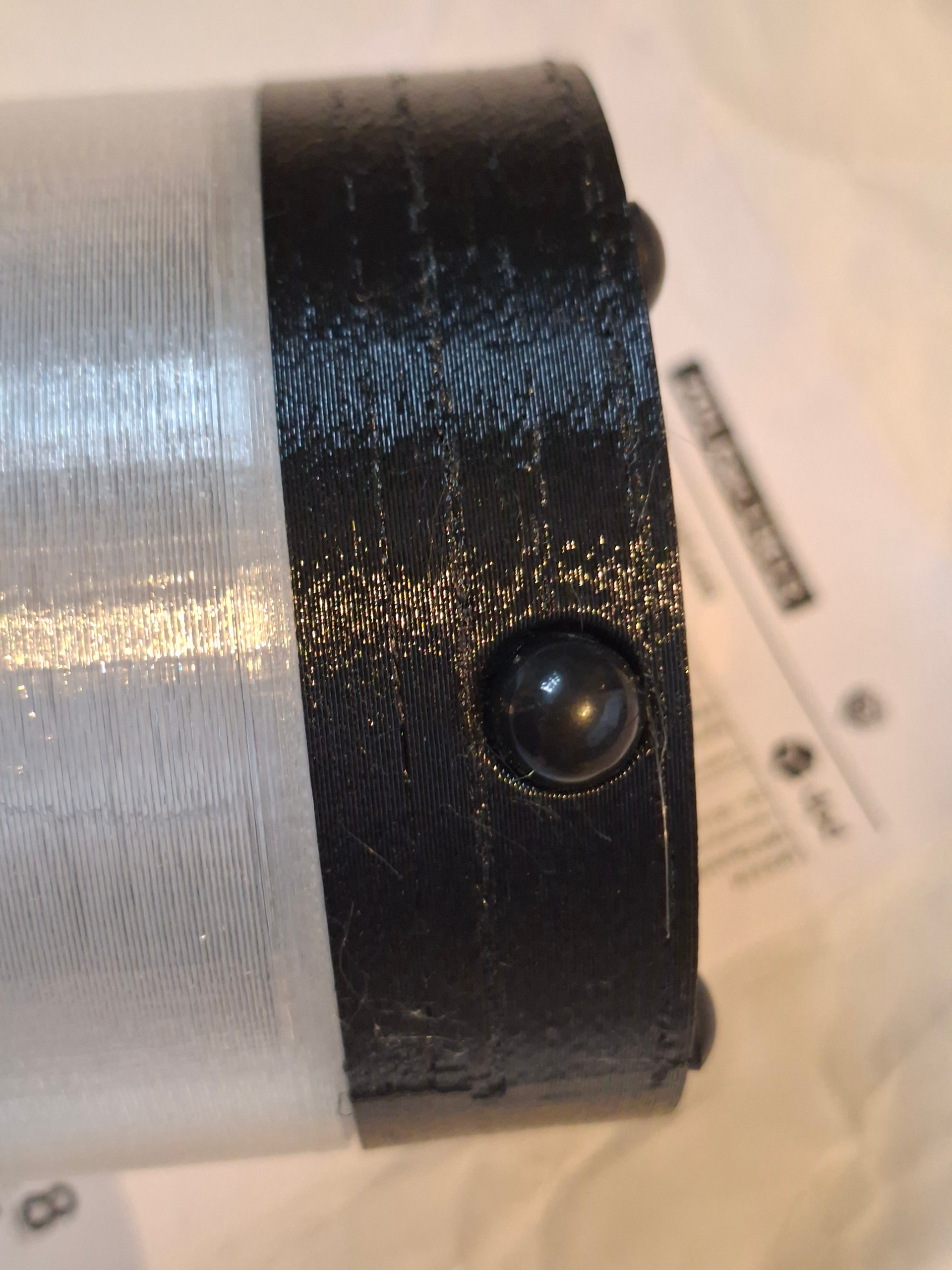
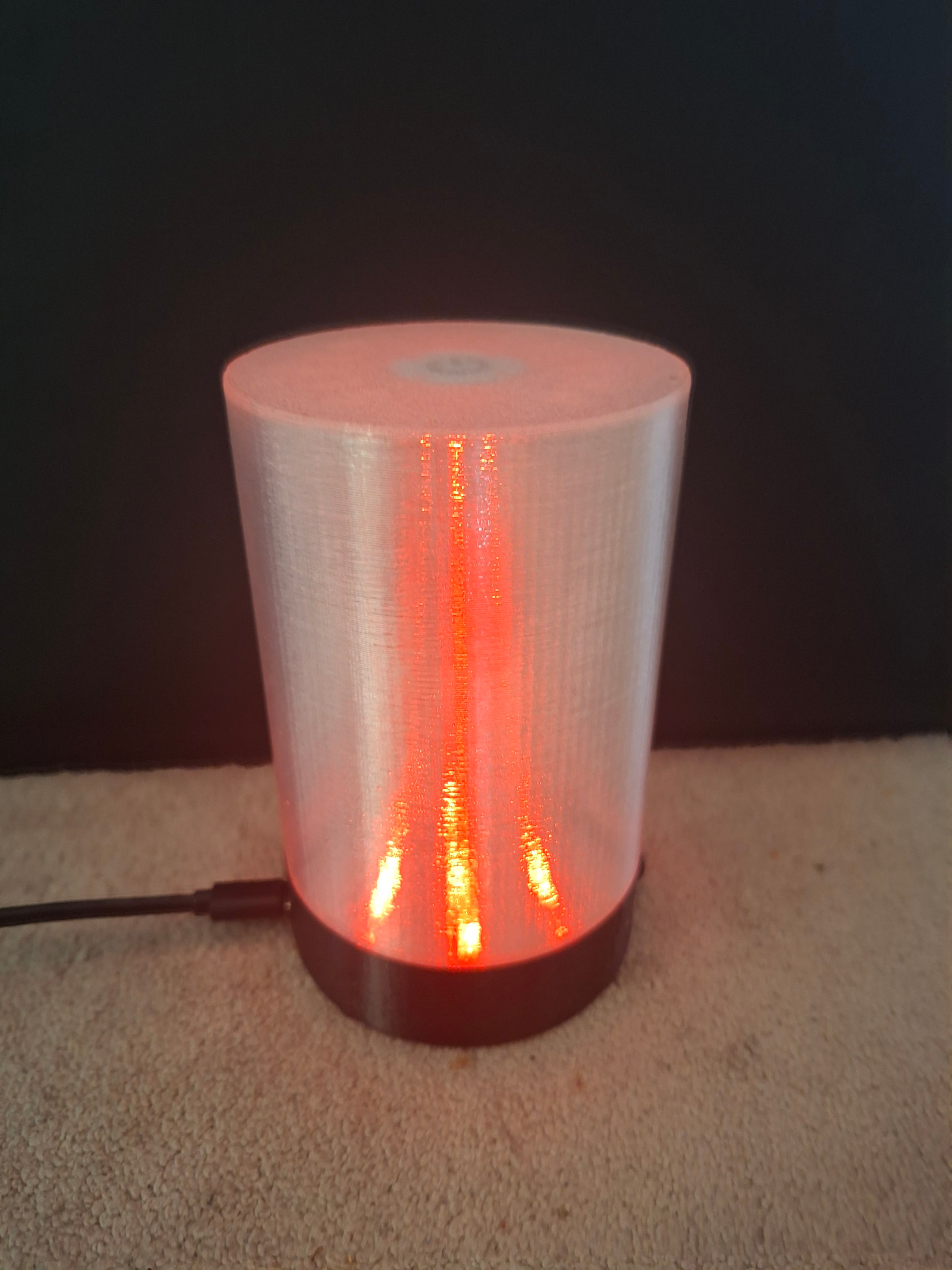
The housing consists of two 3D-printed parts with clearly visible layer lines, stringing and untidy seams.
The black ring shows scratches, gouges and open gaps where the parts meet.
There are foreign particles and hairs/fibres embedded in or stuck to the material.
Edges are not deburred, and the transitions between the parts don’t sit flush.
I understand that a small-batch product comes off a 3D printer, and none of this affects the function as such. For the price, though, I would have expected at least a cleaned-up, post-processed surface — as it is, it feels more like a prototype than a finished product.
Contacting the seller
I sent a complaint on 5. June via Paypal. As of today I have had no reply at all. That is my main criticism, honestly: mediocre finishing is something you can sort out with a seller; a seller who doesn’t respond is not.
A question to Urbandroid
After the fact I looked into the seller’s reputation, and I found more reviews on platforms, with recurring complaints about [e.g. non-delivery / no support / build quality]. Had I seen that beforehand, I would not have ordered.
What prompted me to post here is that the product is still linked from within the app. For me — and I suspect for other buyers too — that link carries an implicit endorsement: if it’s recommended in the app, it seems like a vetted vendor. I’d like to ask whether the Urbandroid team is aware of the seller’s current reputation, and whether keeping the link is still something you’re comfortable with.
I’m not asking anyone here to take responsibility for a third party’s product. I’d just like future buyers to be able to make an informed decision before they order, rather than after.
Hi @r_k,
Thank you for bringing this up and for sharing your honest experience with us.
Just to clarify, Urbandroid is an independent software team with no business ties to Happy Electronics. We integrated SleepPhaser from a technical standpoint to give people an option when Sonar isn’t supported by their phone. The link in the app was meant as a helpful pointer to compatible hardware with smart light features and a contact-less sensor.
That said, public forums tend to naturally highlight negative experiences. People rarely drop by to write a post when a device is working fine, so it’s tricky for us to know how many happy users are there versus bad support cases.
But we completely understand your point: seeing the link in the app feels like a recommendation, and no one wants to run into silent customer support.
We take your point seriously and will be discussing with the team whether keeping the direct link to SleepPhaser still makes sense for our users.
For context, in all the past cases brought to our attention, issues were eventually resolved through either a replacement or a refund.
If you send me a DM or email me at support@urbandroid.org with the email address you used to contact Happy Electronics, I’ll personally reach out to Mr. Kolman to look into the status of your communication with their team.
Hi lenka-urbandroid, and thank you for the quick and open reply — I appreciate it.
To be clear, I never assumed a business relationship between Urbandroid and Happy Electronics. My concern was only about how the link is perceived from a user’s side, and you’ve addressed exactly that, so thank you.
Your point about forums skewing negative is fair, and I’ll gladly grant that my unit may not be representative. What I can’t judge from the outside is the support side, so it’s genuinely useful to hear that previous cases ended in a replacement or refund. That’s more than I’ve been able to get out of them so far.
One thing I want to be precise about: my problem isn’t 3D printing as such. It’s the quality of this particular print. Stringing, open seams, particles embedded in the surface — none of that is inherent to the process. It comes from a poorly dialled-in printer and from skipping post-processing entirely. Both are fixable at negligible cost; a few minutes of finishing per unit would have made all the difference. Plenty of small manufacturers get this right at this price point, so it isn’t a question of budget.
What bothers me most, though, is that nothing in the product presentation prepares you for it. The photos and the description suggest a finished consumer device. Had the actual surface quality been visible up front, I would not have ordered — this sits on a bedside table in my home, not in a workshop. As it stands, it feels like buyers aren’t being told the full story before they order, and that’s the part that leaves a bad taste.
Hi, I already asked Mr Kolman to join in here, so I hope he will be able to give more details about the printing quality (and the product information and presentation in the e-shop).
If you can DM me the details about the order and the communication, I will ask him to check with his support too.
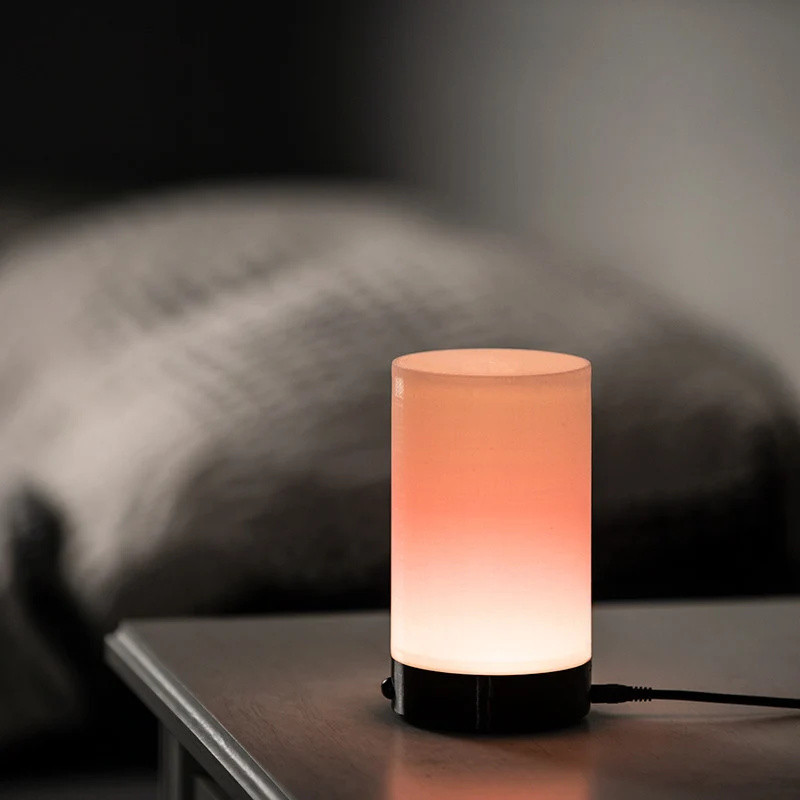
Happy Electronics: The product images show the actual 3D-printed device—not a rendering or a sample from a different production run. - I don’t want to waste any more time; I really cannot recommend the provider.
Hello everyone, Petr Kolman here — Happy Electronics. Lenka asked me to join
this thread, and I apologise for the delay in doing so.
On the printing itself: we have been making this lamp this way for over four
years, and the light quality has not been a complaint we hear. After r_k’s post
I went back and looked at the very first units of this type. Those used a
milkier material that diffused the light more. We changed it because a lot of
customers asked for the opposite — they wanted more light out of the lamp — so
we moved to a lighter, more translucent body. Since that change, nobody has
complained about the light. That is the honest background to the difference
between the product photo and a unit shipped today.
On the photos: our product image was taken by our photographer from about three
metres in a normally lit room — the distance you actually see the lamp from. The
comparison photo here was taken from roughly 40 cm in the dark. In that
situation a phone exposes for the dark scene, the lit lamp is heavily
overexposed, and the backlight makes every print layer and the individual LEDs
stand out. An injection-moulded diffuser would look different in that shot too.
If the lamp feels too harsh, the Sleep Phaser Control app has a “low light”
mode — we added it at the request of parents, and it changes the impression
considerably.
I am not going to pretend 3D printing has no downsides. It does, and we keep
working on the quality. That is also why I offered r_k an exchange for a unit
from our new production, printed with a different technology. That offer still
stands, and I am happy to send photos of it to anyone who is interested.
On returns: our shop has a 30-day return policy, which is beyond the statutory
14-day EU withdrawal period. If the surface finish was not what someone
expected, sending the device back within that window was always an option — and
that is also why the PayPal case was closed in our favour.
If anyone here has a unit they are not happy with, write to
info@happy-electronics.eu and we will sort it out.