The app cannot seem to tell the difference between being asleep and laying in bed quietly trying to sleep. The app thinks I got 9 hours of sleep last night. Really I got like three, and spent the other 6 hours laying there. (I have bad insomnia.) I understand that this is damn near impossible without an EEG.
My problem though (and I really want to be convinced), Is that makes me doubt the validity of all the other data. Like, how can I trust the app to know the difference between REM, deep sleep, or light sleep when it can’t even tell if I’m awake or not?
Also, does anybody have any suggestions on how to correct the sleep times when I myself don’t know exactly when I fell asleep/woke up?
Hi @SlickStretch,
thank you for sharing your feedback. I understand how a discrepancy in awake detection can make the rest of the data feel uncertain, but I’d like to clarify how these two processes differ.
It sounds counterintuitive, but for actigraphy (movement-based tracking), distinguishing between Light and Deep sleep is often more straightforward than distinguishing between being awake and asleep. When a user is lying very still in a dark, quiet room — a common scenario with insomnia — the physical “signature” is nearly identical to light sleep.
While we use several heuristics to bridge this gap (monitoring light, sound, phone usage, and HR spikes), “quiet wakefulness” remains the biggest challenge for the analysis.
The good news: This does not invalidate your sleep stage analysis. Once the app identifies that you are asleep, the algorithms for tracking sleep cycles are highly refined. You can see how our method works here:
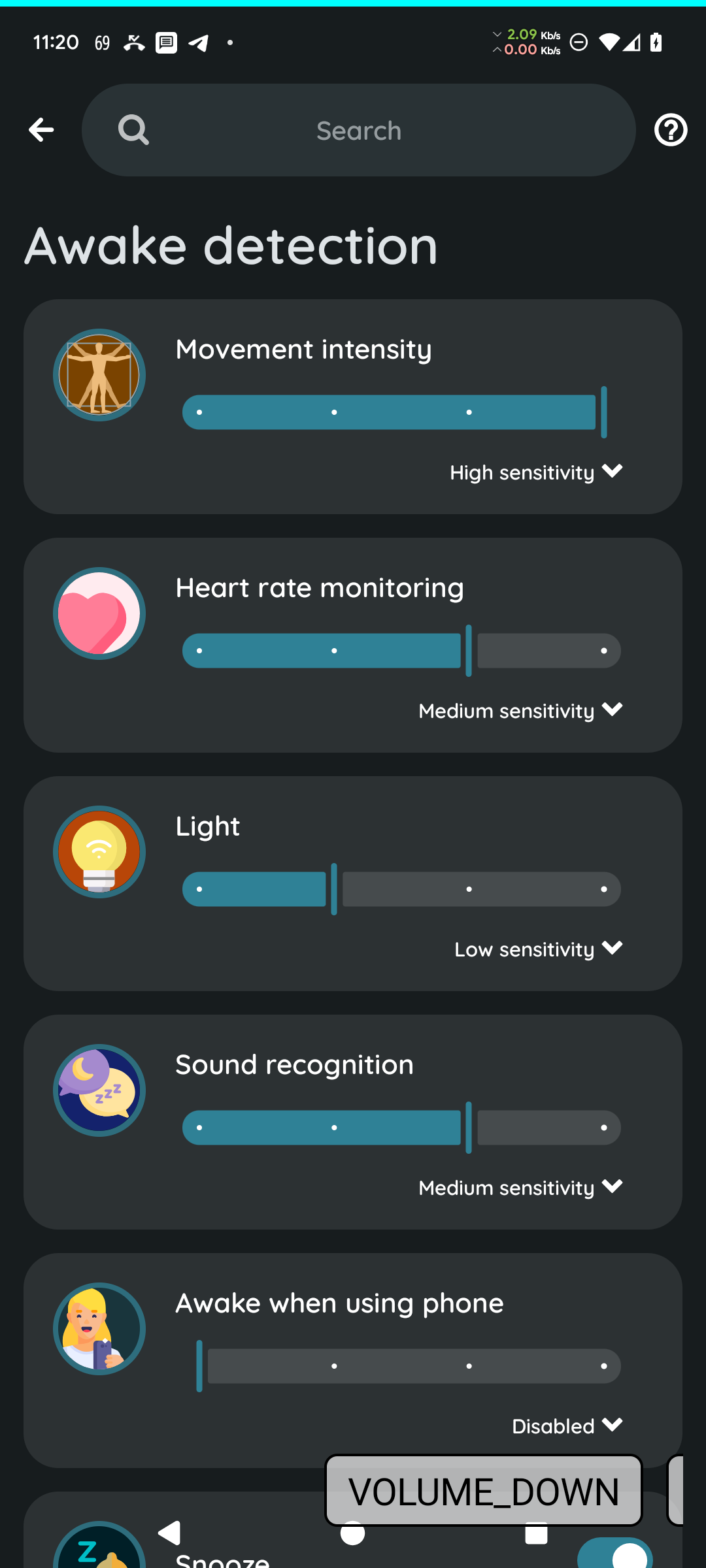
What are your current awake sensitivity levels in Settings → Sleep tracking → Awake detection? Could we try fine-tuning the sensitivity levels? What awake-like events can the app read from the environment?
1 Like
okay, from what you say it sounds like The app should register quiet and awake as light sleep.
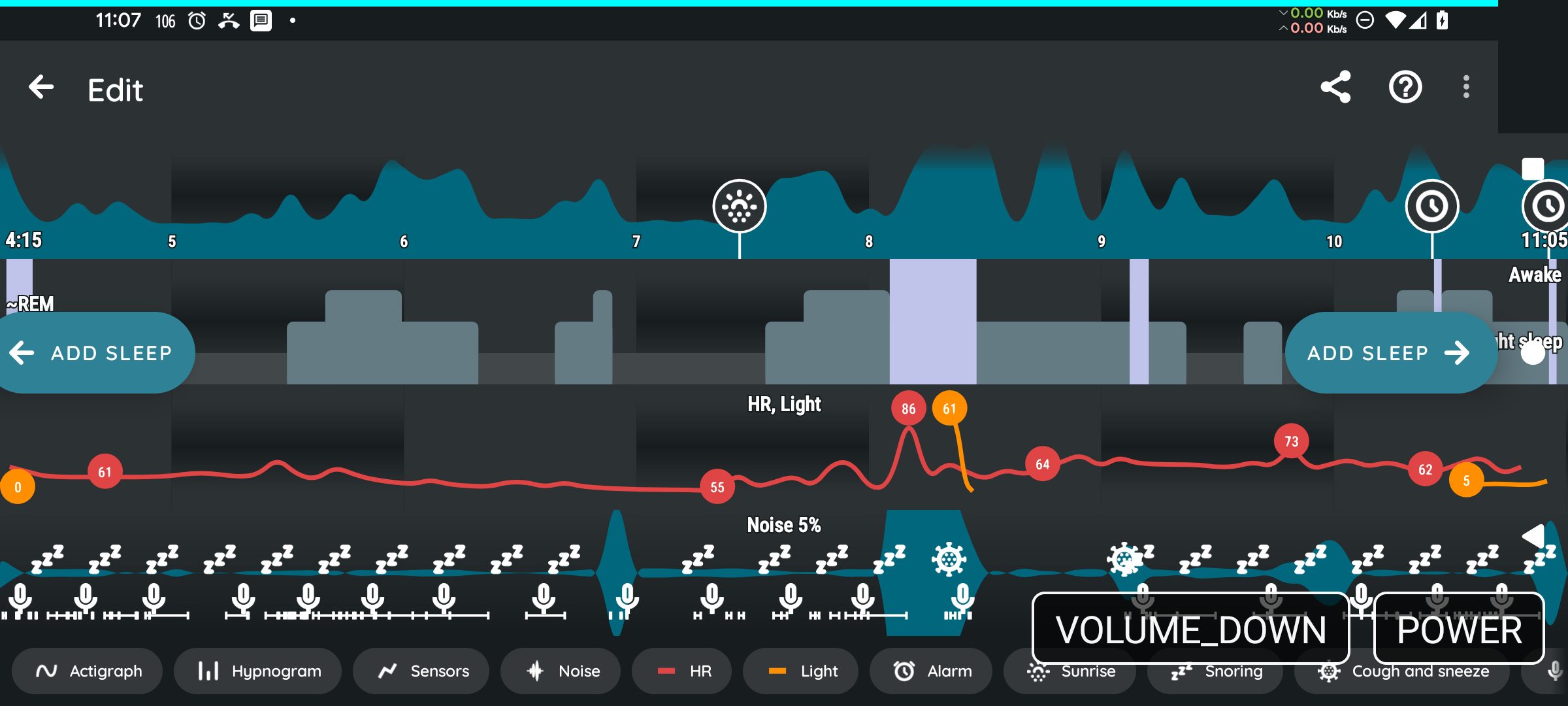
but take a look at this hypnogram from last night. I woke up at 7:00 a.m. (you can see where the light was turned on) I never got back to sleep after that. I did lay in bed and try.
however, between 7:00 a.m. and 11:30 (when I was in bed awake) why is it telling me that I had deep sleep and REM cycles?
what am I supposed to do with that information? how can the sleep analysis be helpful or accurate when a large portion of the data is being collected when I’m not even asleep?
PS here’s my awake detection settings
If the period of quiet stillness (while awake) is very long, like in this case, over half of the data set, the data set will probably be shifted.
Were the recorded sounds after 7:00 really snoring? Snoring is a sound typically associated with sleeping, not being awake.
Which awake-like events could have the app estimate better? Were you using the phone? Can we try increasing the HR awakes? It is quite unusual that the awake state at 07:00 was not associated with even the slightest change in the resting HR.
You can tell the app you are awake by pausing the sleep tracking (from the tracking screen).
most of what it recorded as snoring is silence. there are some clips of traffic going by outside.
I can’t pause every time I wake up. that would wake me up even more, and I would forget to unpause it before falling asleep again.
I can try increasing the heart rate sensitivity.
You can use the Left ≡ menu → Support → Report a bug, and send me your application logs with some details about the sleep. The logs will give me more information about the data and the configuration. Thank you.